Your Guide To Getting a Deep Latch
Getting a deep latch can make or break your breastfeeding experience. Especially in the early days, breastfeeding is time consuming. Most babies eat at least 8-12 times in a 24 hour period, and will spend anywhere from a few minutes to over an hour at the breast in a single feeding. If every single feed is uncomfortable or even painful and leading to nipple damage, that isn’t sustainable for anyone involved! While a little bit of sensitivity or discomfort in the early days can be normal as you learn how to position yourself and your baby learns how to achieve a deep and effective latch, pain that is increasing throughout the feed or is causing nipple damage is not normal and needs intervention. Here are a few strategies so you can achieve a more comfortable and effective latch:
Always remove your baby’s swaddle and mittens before feeding - try to remain in skin to skin contact during the feeding. This is especially important in the early days as baby adjusts to the outside world. Clothes can be irritating or even distracting and get in the way of their innate feeding reflexes. Everything your baby can do, they will do better when in skin to skin contact with you!
Engorgement, especially around day 2-5 postpartum when your milk supply increases, can make it difficult to achieve a deep latch as it can be like taking a bite out of a bowling ball! A technique called reverse pressure softening (see below) can help to reduce swelling around the nipple and areola by pushing back some of that fluid so the space where baby latches is a little softer and easier to latch to.
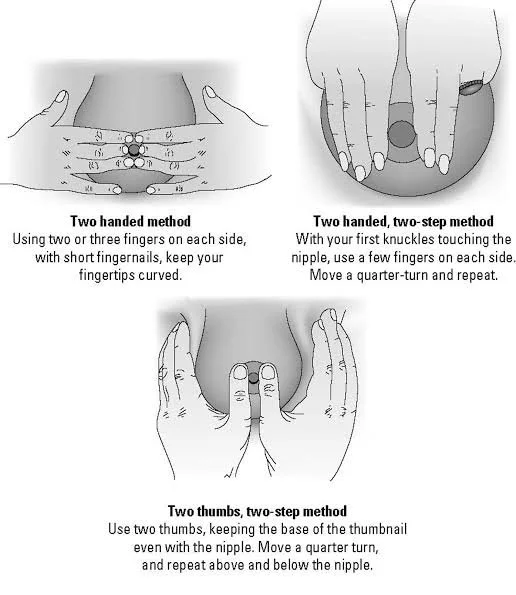
Source: Pregnancy Birth and Beyond
Getting in a comfy position can make all of the difference to achieving a deep latch. When you are comfortable, your baby will be more supported and calm. Some of my favorite positions include laid back, side lying, cradle, and koala. No matter what position you choose, make sure that your baby is well supported all through their body with their ear, nose, and hips all in one straight line.
The gape reflex is an important feeding reflex that caused baby to open wide when their chin is stimulated. When baby opens wide, they can achieve a deep latch from the initial attachment, as opposed to “slurping” the nipple into their mouth and causing some pain in the process. To stimulate the gape reflex, make sure baby’s chin is touching your breast and your nipple is pointed to their nose. Wait for your baby to open wide, then let them latch on, aiming to get as much breast in their mouth as possible.
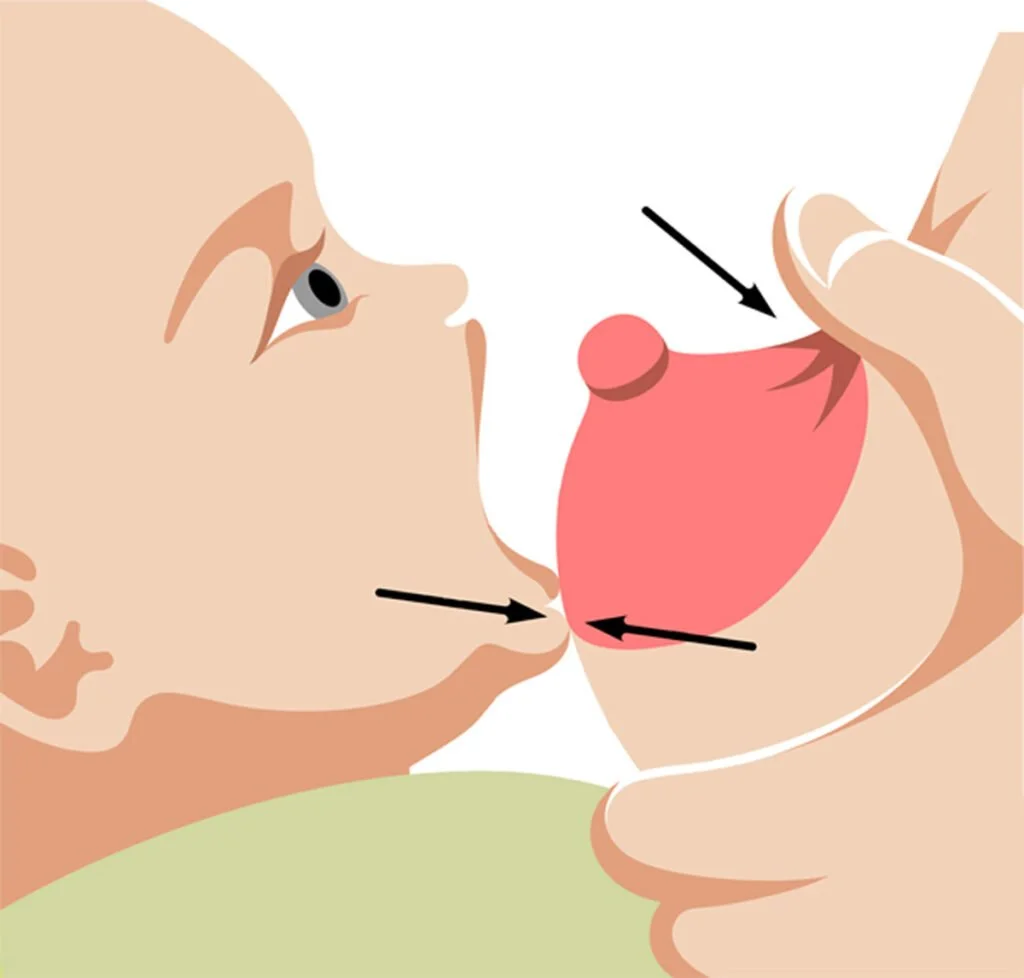
A breast sandwich technique like the above photo can also help by compressing your breast into a smdaller, flatter shape (like a sandwich!) so baby can get more breast into their mouth when they open. Make sure your breast sandwich is at the same angle as baby’s mouth (think sandwich - not taco!).
Again, some initial pain for the first few seconds of a feed can be normal in the early days as both you and your baby learn this new skill. If it hurts beyond the first few seconds, break the latch by placing a pinky in the corner of their mouth and try again. Ignoring pain can lead to shallow latching, nipple damage, and frustration for both you and your baby. Even if the latch looks right, it should also feel right!
If you have tried these techniques and are still experiencing pain, I recommend reaching out to an IBCLC to provide more support. Sometimes even with the best positioning and breast sandwich, baby may be unable to achieve a deep latch due to oral ties, body tension, birth trauma, etc. and a lactation consultant can help you get to the bottom of what is going on and create a targeted care plan so you and your baby can get the support you need. I am an IBCLC available for in person visits in the DC Metro area and virtual support anywhere in the world, book a consultation today!